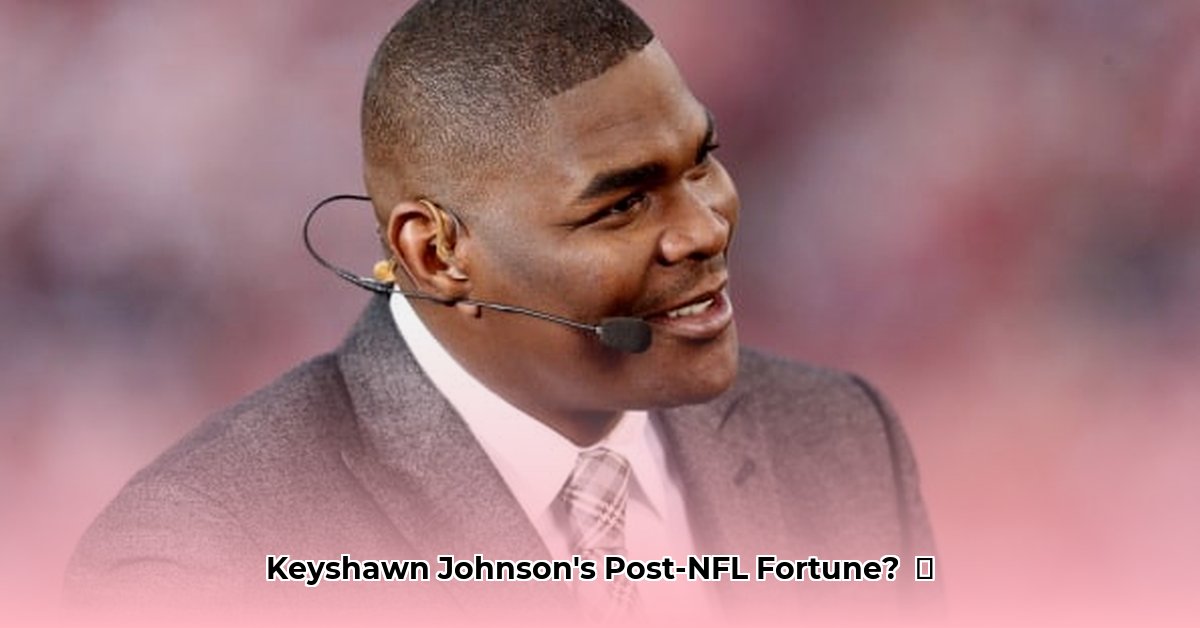
From Touchdowns to Millions: Keyshawn Johnson's Post-NFL Financial Strategy
Keyshawn Johnson's journey transcends the gridiron. While his NFL career earned him an estimated $45 million, his current net worth of approximately $20 million showcases a masterful post-football financial strategy. This case study analyzes Johnson's approach, highlighting key lessons for retired athletes, financial advisors, and anyone seeking to build lasting wealth. Unlike many athletes who face significant financial challenges after retirement, Johnson's success stems from strategic diversification and careful risk management. His story answers the critical question: how can athletic success translate into enduring financial prosperity?
Making Millions in Media: Beyond the Gridiron
Johnson leveraged his notoriety to build a lucrative media career, becoming a recognizable figure on ESPN and FS1. This consistent income stream acts as a crucial foundation for his financial security, providing a reliable flow of revenue that transcends the volatility of other investments. This contrasts sharply with athletes who rely solely on fleeting endorsements or unstable business ventures. How did this calculated strategy safeguard him from the typical post-retirement financial pitfalls faced by many other athletes? The answer lies in his understanding of the importance of consistent, reliable income streams.
Building a Real Estate Empire: A Tangible Foundation
Real estate forms another pillar of Johnson's financial success. His shrewd investments in property have generated consistent rental income while simultaneously appreciating in value. This is a strategic move toward building wealth in a tangible, less volatile asset class compared to the often-risky ventures other athletes pursue. This steady growth contrasts starkly with the ephemeral nature of many endorsements, which can disappear unexpectedly and frequently do so. How many athletes can boast this level of long-term stability in their financial portfolio?
Diversification: The Cornerstone of Johnson's Financial Success
Johnson’s wealth isn't built on a single investment—it’s a testament to effective diversification. He strategically spread his assets across media, real estate, and other business ventures. This approach minimized risk, creating multiple revenue streams and ensuring financial resilience. This stands in stark contrast to the all-too-common strategy of concentrating wealth on one or two high-risk ventures, a gamble that often fails spectacularly for many athletes. The power of this diversification strategy is evident in Johnson's sustained financial health. How did this careful planning contribute to his ability to navigate market changes and maintain lasting wealth?
Key Takeaways: Financial Lessons from a Gridiron Great
- Diversification is Key: Spreading investments across multiple asset classes reduces overall risk.
- Consistent Income Streams: Stable revenue sources, like a media career, provide a crucial financial foundation.
- Long-Term Perspective: Investing for the future requires patience and a long-term strategy.
Managing Risk: A Calculated Approach
Johnson's success wasn't accidental; it resulted from deliberate risk management. He carefully assessed the potential risks associated with different investment opportunities, employing strategic measures to mitigate those risks. This calculated approach is a key takeaway for aspiring investors. How did this measured risk management lead to his outstanding portfolio performance? The answer lies in his understanding of not only the potential rewards, but also the potential pitfalls, and his proactive steps to mitigate adverse outcomes.
Actionable Steps to Build Wealth: Lessons from Keyshawn Johnson
- Assess Risk Tolerance: Understand your comfort level with potential investment losses.
- Develop a Financial Plan: Create a comprehensive plan aligned with your financial goals.
- Diversify Investments: Spread your assets across stocks, bonds, real estate, and other asset classes.
- Seek Professional Advice: Consult a financial advisor for personalized guidance.
- Regularly Review and Rebalance: Monitor your portfolio and make adjustments to maintain balance.
This information is for educational purposes only and is not financial advice. Consult a financial advisor for personalized guidance.